Line of Credit vs. Term Loan: Which Costs Less
Line of Credit vs. Term Loan: Which Costs Less
Last updated: September 2026
Introduction
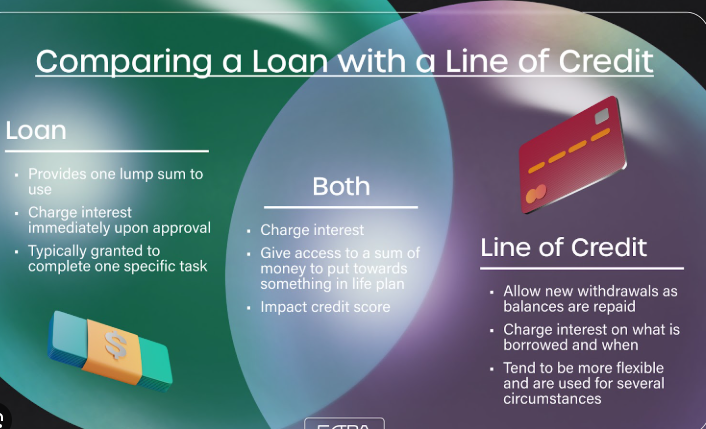
Term loans typically advertise the lower headline rate. Lines of credit typically end up cheaper in practice, for one specific reason: you only pay interest on what you actually draw. Which one costs less for your business depends less on the rate on the page and more on how you’ll actually use the money.
This guide breaks down real 2026 rate ranges for both products, walks through the math on a few common scenarios, and shows how to figure out which one is genuinely cheaper for your situation.
The Core Structural Difference
A term loan delivers a lump sum upfront, repaid on a fixed schedule with a fixed or floating rate. A line of credit gives you access to a set credit limit that you can draw from, repay, and draw again. You pay interest only on the outstanding balance, not the full approved amount.
That structural difference is why comparing the two by interest rate alone is misleading. A term loan’s lower rate applies to 100% of the borrowed amount from day one. A line of credit’s higher rate might apply to a much smaller average balance over the same period.
Payday Loan Alternatives That Won’t Wreck Your Credit
Real Rates in 2026
| Product | Typical Rate Range | Best Rates From |
|---|---|---|
| Bank term loan | 6.75% – 14.75% (some sources cite as low as 6.8%) | Traditional banks, strong credit |
| SBA 7(a) loan | 9.75% – 13.25% | SBA-approved lenders |
| Business line of credit (bank) | 6.5% – 22% | Traditional banks |
| Business line of credit (online lender) | 20% – 60%+ | Online/alternative lenders |
| SBA CAPLine (revolving) | 10.5% – 14.5% | SBA-backed lenders |
| Merchant cash advance (for comparison) | Effective APR 40% – 350%+ | Alternative financing |
Banks consistently offer the lowest rates on both products, while online and alternative lenders trade a faster, easier approval process for meaningfully higher rates on either loan type.
Worked Example: One-Time Purchase vs. Recurring Need
Scenario 1 — $100,000 for equipment, borrowed all at once: A term loan at an 8% fixed rate over five years gives you a predictable monthly payment for the full amount, with interest accruing on the full $100,000 from day one. A line of credit at a comparable 10% rate would cost more here. You’d be using the entire limit continuously rather than drawing and repaying. The term loan is the cheaper structural fit for a single, large, one-time cost.
Scenario 2 — $100,000 limit, but the business only needs $25,000 outstanding at any given time, cycling through inventory purchases: A line of credit charging 12% APR on an average outstanding balance of $25,000 costs roughly $3,000 a year in interest. The same $100,000 taken as a term loan at 8% would accrue interest on the full amount, even the $75,000 sitting unused. That costs over $8,000 a year even at the lower headline rate. Here, the line of credit is dramatically cheaper, despite its higher rate, because it only charges for what’s actually being used.
When a Term Loan Costs Less
- You need the full amount immediately for a single purchase, like equipment, a buildout, or an acquisition
- You want a fixed monthly payment for easier budgeting and forecasting
- You qualify for bank or SBA rates, where term loans often carry the lowest APRs available
- You’re financing something with a long useful life, where a longer repayment term matches the asset’s lifespan
When a Line of Credit Costs Less
- Your need is recurring or unpredictable, like payroll gaps, seasonal inventory, or short-term cash flow dips
- You won’t use the full limit continuously — since interest only accrues on the drawn balance, an unused line costs little to nothing beyond a possible maintenance fee
- You expect to need funds multiple times a year — one approved line beats reapplying for a new term loan every time a gap appears
- You value flexibility over a fixed schedule, since you can draw only what you need, when you need it
Fees to Watch Beyond the Headline Rate
Both products carry costs beyond the interest rate that can shift which one is actually cheaper:
- Origination fees on term loans, typically 1%–5% of the loan amount
- Draw fees and maintenance fees on lines of credit, sometimes 0.55%–1.55% of the principal charged monthly on certain products
- Prepayment penalties, which can erase the benefit of paying off a term loan early
- Annual review and renewal requirements on lines of credit, which some lenders require alongside a periodic paydown to zero
Comparing APR alone, without factoring in these fees, can make one option look cheaper than it actually is. The full cost only becomes clear once everything’s added up.
How to Decide Which Costs Less for Your Business
- Estimate your actual average balance, not just the total amount you might need. A line of credit’s cost depends entirely on how much you draw and for how long
- Compare full APR, not headline rates — factor in origination fees, draw fees, and maintenance charges on both sides
- Match the product to the purpose. A one-time purchase favors a term loan. A recurring or unpredictable need favors a line of credit
- Get quotes from both banks and online lenders for whichever product fits — the rate spread between lender types is wide enough that it’s worth comparing
- Run the actual numbers with a business loan calculator using your specific amount, rate, and expected usage pattern before committing to either
Frequently Asked Questions
Is a business line of credit always more expensive than a term loan? Not necessarily. Lines of credit typically carry higher headline rates. But since you only pay interest on the amount you actually draw, the real dollar cost can be lower than a term loan if you don’t need the full amount continuously.
Can I get both a term loan and a line of credit for my business? Yes. Many businesses use a term loan for a specific large purchase and keep a line of credit open separately for ongoing cash flow flexibility.
What credit score do I need for the best rates on either product? Bank term loans and SBA products generally require the strongest credit profiles and time in business, while some online lenders extend lines of credit to businesses with scores as low as 600, at a meaningfully higher rate.
Which one is faster to get approved for? Online lenders can approve and fund either product in as little as 24 hours, while banks and SBA-backed loans typically take longer but offer lower rates in exchange for the wait.
Final Thoughts
Neither product is universally cheaper. The right answer depends on how you’ll actually use the money. A term loan tends to cost less for a single, large, one-time need where you’ll use the full amount right away. A line of credit tends to cost less for recurring or unpredictable needs, since you’re only paying for what you draw. Run your specific numbers, including the fees beyond the headline rate, before deciding which one actually saves your business more.
This article is for general informational purposes only and does not constitute financial or legal advice. Rates, terms, and fees vary by lender and are subject to change. Consult a licensed financial advisor about your specific situation.



1 comment