Government Scholarships vs. Student Loans:What Actually Costs Less Long-Term
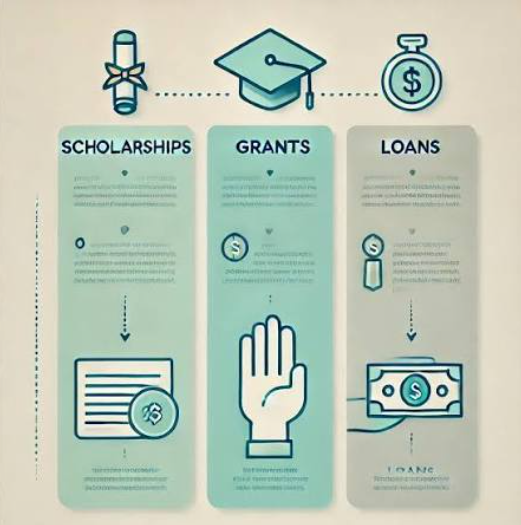
Government Scholarships vs. Student Loans: What Actually Costs Less Long-Term
Last updated: September 2026
Government scholarship costs you nothing to repay, but it’s competitive, uncertain, and often covers only a fixed stipend amount (commonly €900–€1,400/month for major European programs) rather than your full desired budget. A student loan is far more certain to get, but the real cost compounds: a $50,000 loan at a 12% average rate repaid over 10 years costs roughly $86,000–$96,000 total once interest is included — nearly double the amount borrowed. The honest answer isn’t “always choose one” — it’s understanding exactly what each path actually costs before you commit to either.
Most students frame this as a binary choice, but the real financial comparison is more nuanced than “free money vs. debt.” Here’s the actual math, side by side.
Best Student Loans for International Students Studying in the US
The Real Cost of Each Path
| Government/institutional scholarship | Private student loan | |
|---|---|---|
| Upfront cost to you | $0 (typically) | $0 upfront, but accrues interest immediately or after grace period |
| Total repaid | $0 | Principal + interest — often 1.5–2x the original amount over a 10-year term |
| Certainty of receiving it | Competitive; not guaranteed | High, if you meet lender eligibility criteria |
| Coverage amount | Often fixed (tuition + set stipend) | Flexible — can cover exactly what you need, including living costs beyond a scholarship’s fixed stipend |
| Application effort | High — essays, recommendations, competitive selection | Lower — primarily financial/eligibility documentation |
| Timeline | Fixed annual deadlines, months of lead time | Can often be arranged closer to your enrollment date |
What a Loan Actually Costs Over Time
This is the calculation most students skip. Using current 2026 rates as a reference point:
- US federal loans (6.52% undergraduate rate): a $30,000 loan repaid over 10 years costs roughly $40,700 total — about $10,700 in interest
- A private international student loan at Prodigy Finance’s average rate (~14.96% APR): that same $30,000 could cost $52,000–$58,000 total over 10 years — nearly double the interest of a federal-rate loan
- A private loan at the higher end of the market (18%): total repayment on $30,000 can approach or exceed $60,000 — genuinely comparable to paying for the degree twice
The rate you get matters enormously. A borrower with a cosigner and strong credit accessing a 7–9% rate pays dramatically less over the loan’s life than a no-cosigner borrower at 14–18%, even for the identical amount borrowed. This is one of the strongest arguments for exhausting scholarship and grant options first, even partial ones — every dollar not borrowed at a high rate is a dollar you don’t pay back 1.5–2x over.
What a Scholarship Actually Saves You
Using real 2026 figures from major programs:
- Erasmus Mundus Joint Master’s: 100% tuition plus €1,000–€1,400/month for up to two years — on a typical €15,000–€20,000/year European master’s program, this can represent €50,000–€70,000+ in total value including stipend, fully avoided as debt
- DAAD Study Scholarship: €934/month plus tuition-free study at most German public universities — over a two-year program, this represents roughly €22,000+ in stipend value alone, on top of tuition most German public universities don’t charge internationally anyway
The catch: these amounts are fixed, not flexible. If your actual cost of living exceeds the stipend, or your program runs longer than the funded period, you may still need to borrow to cover the gap — meaning scholarships and loans aren’t always either/or; they’re often layered.
The Honest Trade-Off Nobody States Plainly
Scholarships are cheaper but not guaranteed. Erasmus Mundus alone receives many multiples more applicants than its roughly 2,500 annual awards can fund. Building your entire financial plan around winning a specific scholarship — without a backup plan — is a genuine risk, not just pessimism.
Loans are close to guaranteed but never actually “free.” Even a 0%-interest-while-in-school loan starts accruing cost the moment repayment begins, and the total cost scales directly with both your rate and your repayment term length. A loan is best understood as buying certainty and flexibility, at a real, calculable price.
The strongest financial strategy for most students is layered, not binary: apply broadly for scholarships and grants first (even partial ones reduce how much you need to borrow), then use a loan only for the genuine remaining gap — never as your entire funding plan by default, and never at a rate you haven’t compared against at least two other lenders.
A Framework for Deciding
- Calculate your total program cost first — tuition, living costs, insurance, and travel, not just tuition alone
- Apply for every scholarship you’re plausibly eligible for, even partial ones — a €5,000 award still reduces your borrowing need and its associated compounding interest
- If you don’t win full funding, calculate the actual total repayment cost of your loan options — not just the monthly payment, which can make a bad rate feel manageable while hiding the total cost
- Compare a cosigned vs. no-cosigner loan rate difference directly — if you have access to a cosigner, the total savings over a 10-year term are often substantial enough to be worth the conversation
- Never assume a scholarship will come through before committing to an enrollment deposit or visa timeline — always have a funding backup plan in place by the time you need to commit
Frequently Asked Questions
Is it always better to get a scholarship than take out a loan? Financially, yes, in terms of total cost — a scholarship costs you nothing to repay, while a loan’s total cost can run 1.5–2x the amount borrowed depending on the rate and term. The trade-off is certainty: scholarships are competitive and not guaranteed, while a qualifying loan is much more reliable to secure.
How much does a typical student loan actually cost after interest? It depends heavily on the rate. A $30,000 loan at a federal-level rate (around 6.5%) costs roughly $40,700 total over 10 years. The same amount at a higher private international-student rate (around 15%) can cost $52,000–$58,000 or more.
Can I combine a scholarship and a loan? Yes, and this is common. Many students use a scholarship or grant to cover tuition and a large portion of living costs, then take a smaller loan to cover the remaining gap — this significantly reduces total interest paid compared to financing the entire program cost with debt.
What’s the real value of a program like Erasmus Mundus compared to taking a loan? Erasmus Mundus covers 100% tuition plus a monthly stipend (€1,000–€1,400), representing tens of thousands of euros in total value that would otherwise need to be borrowed and repaid with interest — making it one of the highest-value scholarships available for master’s study in Europe.
Should I wait to hear back from scholarship applications before arranging a loan? It’s safer to arrange loan pre-approval or a funding backup plan in parallel with scholarship applications, rather than waiting — visa and enrollment deadlines often don’t align neatly with scholarship result timelines, and you don’t want to be scrambling for funding at the last minute.
Does a lower monthly loan payment always mean a cheaper loan? No. A lower monthly payment often comes from a longer repayment term, which can mean paying significantly more in total interest over the life of the loan, even though each individual payment feels smaller. Always compare total repayment cost, not just the monthly figure.
This guide reflects publicly available scholarship and lending data as of September 2026. Interest rates, scholarship amounts, and eligibility change over time — always confirm current figures directly with the specific scholarship program or lender before making a funding decision.

1 comment