Life Insurance for Business Owners: Key Person Coverage
Life Insurance for Business Owners: Key Person Coverage
Last updated: September 2026
Key person (or “key man”) life insurance is a policy your business owns, pays for, and collects on if a critical owner or employee dies — the payout goes to the company, not the person’s family. A healthy 45-year-old covered by a $2 million, 20-year term policy typically costs $200–$350/month, while a 60-year-old in good health might pay around $213/month for a smaller policy. Coverage amounts typically follow a 5–10x annual compensation formula — so a key employee earning $150,000–$200,000 would generally warrant $750,000 to $2 million in coverage, depending on their specific role and impact.
Most small and mid-size businesses either skip this coverage entirely or buy an arbitrary number without doing the math — both are mistakes. Here’s what key person insurance actually protects, what it costs, and the tax and legal details most agents skip explaining clearly.
Commercial Auto Insurance Quotes for Small Fleets
What Key Person Insurance Actually Is
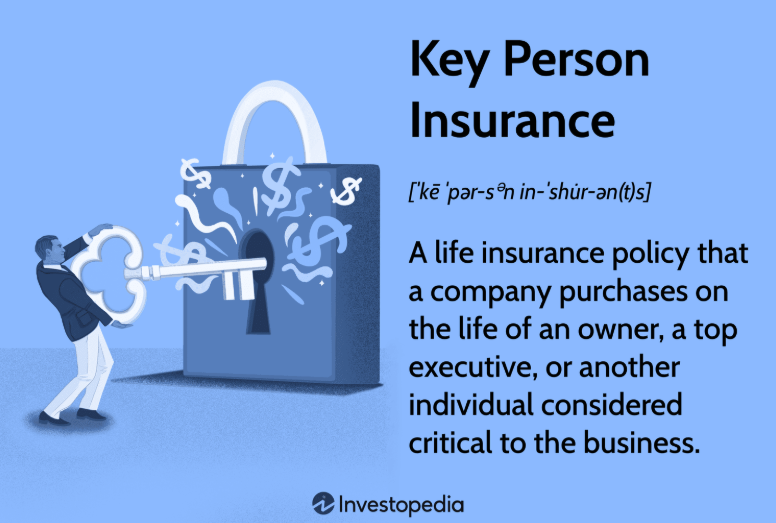
Key person insurance is standard life insurance, just structured differently: the business owns the policy, the business pays the premiums, and the business is the beneficiary — not the insured person’s family. If the insured individual dies, the death benefit goes to the company, giving it breathing room to:
- Cover lost revenue while operations stabilize
- Fund the search for and training of a replacement
- Pay off business loans that required a personal guarantee
- Reassure investors, lenders, or clients that the business can absorb the loss
Most small and mid-sized companies are, in a real sense, one unexpected death away from a genuine cash crisis they’ve never actually modeled — key person insurance exists specifically to prevent that.
Three Types of Business Life Insurance (They’re Not the Same Thing)
| Type | What it protects | Who’s insured | Coverage amount basis |
|---|---|---|---|
| Key person insurance | The business itself, against losing a critical individual | A founder, top salesperson, lead engineer, or anyone whose absence would create financial hardship | 5–10x annual compensation, or debt-plus-replacement cost |
| Buy-sell agreement funding | Surviving partners’ ability to buy out a deceased partner’s share | Each business partner/owner | Equal to each partner’s ownership stake value |
| Business loan coverage | A lender’s collateral requirement | Whoever the lender specifies (often the primary owner) | Set by the lender, sometimes via partial assignment |
Each serves a genuinely different purpose, and a business can reasonably need more than one type simultaneously — a founder might be covered under both a key person policy and a buy-sell agreement policy at the same time.
What Key Person Insurance Actually Costs
Pricing follows standard life insurance mechanics — age, health, coverage amount, and policy length are the primary drivers:
- A healthy 45-year-old with a $2 million, 20-year term policy: roughly $200–$350/month, depending on carrier and underwriting
- A 55-year-old with some health history: significantly more than the above range
- A 60-year-old in good health: around $213/month for a policy sized to their specific role
Term life insurance is generally the right structure for key person coverage — it’s cheaper than whole life and matches the period the person is actually expected to remain critical to the business (commonly 10–20 years), rather than paying for lifetime coverage the business doesn’t need.
How Much Coverage Does Your Business Actually Need?
Sizing key person coverage is closer to informed estimation than precise calculation — but three methods give you a real, defensible number:
1. Multiple-of-compensation method (most common): Multiply the key person’s annual compensation by 5–10x. A key employee earning $150,000/year would typically warrant $750,000–$1.5 million in coverage; one earning $200,000 could warrant $1–2 million.
2. Debt-plus-replacement method: Add up any personally guaranteed business debt, then add 1–2 years of the income the business would need to replace while a successor is found.
3. Coverage-by-business-stage benchmarks:
- Small businesses: typically $100,000–$500,000, covering immediate debts and replacement search costs
- Established companies (key executives, top salespeople): typically $1–5 million
- High-growth startups: investors may require $10 million or more for founders whose personal reputation directly drives company valuation
Get an actual business valuation before finalizing a number — coverage amounts for key person and buy-sell policies should be based on real figures, not a guess.
The Tax Treatment Most Business Owners Get Wrong
This is the single most common misconception in this entire topic: premiums are not tax-deductible. You pay them with after-tax dollars under IRC Section 264. The upside is that the death benefit your company receives is tax-free under IRC Section 101 — but many business owners budget for the deduction and are caught off guard when it isn’t there. Factor the full after-tax premium cost into your budgeting from the start.
A Legal Requirement Almost No One Mentions
Before a key person policy is issued, the employer is legally required to notify the employee in writing that the company intends to insure their life, disclose the maximum coverage amount, and confirm the company will be the owner and beneficiary. The employee must provide written consent. This requirement, under IRC Section 101(j), exists to prevent businesses from secretly insuring employees without their knowledge — and failing to comply can result in the death benefit being taxed as ordinary income instead of received tax-free. The insured person generally also needs to be a director, a highly compensated employee, or an individual earning above a specific compensation threshold at the time the policy is issued.
Always work with a qualified tax advisor and insurance professional when structuring this coverage — the compliance details genuinely matter to whether the tax benefit holds up.
When You’re Required to Carry This Coverage
If you’ve applied for an SBA loan or similar financing, you may already be familiar with this requirement — lenders often require key person life insurance as a loan condition, especially when the business is closely tied to one owner or operator. The good news: the policy doesn’t always need to cover the full loan amount. Sometimes a partial assignment of an existing policy satisfies the lender. Your lender specifies what they need, and your agent can structure coverage accordingly — this is one of the more straightforward use cases, since you know exactly what number you’re solving for.
Practical Guidance Before You Buy
- Get a real business valuation first — don’t size a policy off a guess
- Keep personal and business coverage separate — don’t rely on one policy to cover both your family’s needs and the business’s obligations
- Review your buy-sell agreement’s funding assumptions if you have one — many agreements exist on paper without any insurance actually funding them
- Choose term for pure protection, permanent only if you specifically want a cash-value component — term is right for most straightforward key person or buy-sell needs
- Confirm the notice-and-consent paperwork is completed correctly — this protects the tax-free treatment of the eventual payout
Frequently Asked Questions
How much does key person life insurance cost? It depends on the insured person’s age, health, and coverage amount. A healthy 45-year-old with a $2 million, 20-year term policy typically pays $200–$350/month. A 60-year-old in good health might pay around $213/month for a smaller policy.
Are key person insurance premiums tax-deductible? No. Premiums are paid with after-tax dollars under IRC Section 264. The trade-off is that the death benefit the company receives is tax-free under IRC Section 101.
How much key person coverage does my business need? A common starting point is 5–10 times the key person’s annual compensation. Small businesses often carry $100,000–$500,000, established companies with key executives typically carry $1–5 million, and high-growth startups may need $10 million or more for a critical founder.
What’s the difference between key person insurance and buy-sell agreement funding? Key person insurance protects the business against the financial impact of losing a critical individual. Buy-sell agreement funding specifically ensures surviving partners can buy out a deceased partner’s ownership share — a different purpose with a different coverage-sizing method.
Do I need to tell the employee I’m insuring their life? Yes, this is legally required. Under IRC Section 101(j), the employer must notify the employee in writing, disclose the maximum coverage amount, and confirm the company will own and benefit from the policy — and the employee must provide written consent. Failing to comply can result in the death benefit being taxed instead of received tax-free.
Will my lender require key person insurance for a business loan? It’s common, especially for SBA loans or when the business is closely tied to one owner. The policy doesn’t always need to cover the full loan amount — your lender specifies the requirement, and a partial assignment of an existing policy sometimes satisfies it.
This guide reflects publicly available insurer and tax information as of September 2026. Coverage amounts, premiums, and tax treatment depend on individual circumstances and change with tax law — always work with a licensed insurance agent and a qualified tax advisor before purchasing or structuring key person coverage.



1 comment