Tax Preparation Software: TurboTax vs H&R Block
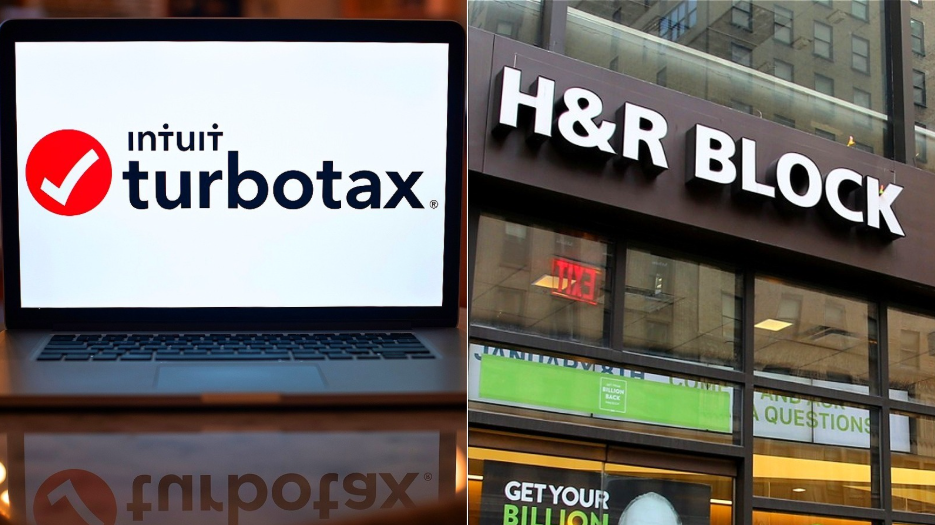
Tax Preparation Software: TurboTax vs H&R Block
Last updated: June 2026
For the 2026 filing season, H&R Block generally wins on price — its paid tiers run roughly $15–$30 cheaper than TurboTax’s equivalent tiers, and it includes one free state filing where TurboTax charges $59 per state with no free option at any tier. TurboTax generally wins on interface polish and investment/self-employment import tools. If your 2025 adjusted gross income was $89,000 or less, check IRS Free File before paying either one — you may not need to pay at all.
Tax software pricing looks simple on the homepage and gets complicated fast once you actually start filing. Every major provider uses tiered pricing that escalates based on your income sources and the forms you need — what starts as a “$0” advertised price can climb well past $100 by the time you add a state return and a few extra forms.
International Money Transfer: The Cheapest Way to Send Money Abroad
What Free Actually Means (and Where It Stops)
Every major provider advertises a free tier, but free filing is generally reserved for simple returns only — typically W-2 income with the standard deduction and no additional schedules. The moment you add freelance income, investment sales, rental income, or itemized deductions, most providers push you into a paid tier.
Genuinely free options worth checking first:
- IRS Free File — available if your 2025 AGI was $89,000 or less, regardless of which participating software you use
- A small number of providers offer completely free federal filing for most users, even beyond the IRS threshold, though state filing sometimes carries a separate charge
Always check free-file eligibility before assuming you need to pay anything.
2026 Pricing Comparison: The Major Players
| Provider | Free tier | Mid-tier (Deluxe) | State filing | Notable strength |
|---|---|---|---|---|
| TurboTax | Simple returns only | ~$69 | $59/state, no free state at any tier | Polished interface, strong investment/crypto import tools |
| H&R Block | Simple returns, slightly broader coverage | ~$35 | One free state included, ~$37 for additional states | Best free-tier breadth; 12,000+ in-person offices for backup help |
| TaxAct | Simple returns | Competitive, often below TurboTax | Varies by tier | Strong for small business/S-Corp filers |
| TaxSlayer | Simple returns | Generally the lowest-cost paid option | Varies by tier | Best budget pick for straightforward returns |
Pricing moves during the season — providers typically offer their lowest prices in December and January, with costs climbing as the filing deadline approaches. Filing early isn’t just about avoiding a scramble; it can genuinely cost you less.
TurboTax vs. H&R Block: The Real Difference
If you’re choosing between the two biggest names, the decision usually comes down to a few concrete factors rather than brand reputation:
- Price: H&R Block is cheaper at nearly every tier, and its included free state filing can save $60–$100+ if you file in more than one state
- Support: H&R Block includes screen-sharing and chat support with a tax professional at no extra cost on paid tiers — TurboTax generally requires an upgrade to Expert Assist for equivalent help
- Complex situations: TurboTax tends to have the edge for heavy investment activity, RSUs, cryptocurrency, and QuickBooks-integrated self-employment filing
- In-person backup: H&R Block has thousands of physical offices if you want a human to step in; TurboTax’s in-person equivalent is more limited
Both offer a maximum-refund guarantee and 100% accuracy guarantee, covering any penalty caused by a software calculation error — so accuracy protection isn’t a deciding factor between them.
A Word on Tax Refund Advances
Several providers offer to release part of your expected refund early as a loan before your actual refund arrives. Some of these are offered at 0% APR with no fee as a customer-acquisition tool. Others — often marketed by smaller providers — carry real interest costs, with APRs reported as high as 35.99% on some products. Before accepting any refund advance, confirm the actual APR and fee structure in writing; a genuinely free advance and an expensive short-term loan can look identical in the marketing.
How to Choose the Right Option for Your Situation
- Check IRS Free File eligibility first if your AGI is under the current threshold — this can eliminate the cost question entirely
- If your return is simple (W-2 income, standard deduction, one state), a free tier from any major provider will handle it — price shouldn’t be the deciding factor since the outcome is identical
- If you have self-employment or investment income, compare the specific paid tier that covers your situation across at least two providers — the gap can be $30–$50 or more for identical coverage
- If you value in-person backup, weigh that against pure price — H&R Block’s office network is a genuine differentiator if you want a human safety net
- If you’re filing in multiple states, factor the per-state fee into your total cost comparison — it can flip which provider is actually cheaper
Frequently Asked Questions
Is TurboTax or H&R Block better in 2026? H&R Block generally wins on cost, included free state filing, and built-in support access. TurboTax generally wins on interface polish and tools for complex situations like investments, RSUs, or crypto. Neither is universally “better” — it depends on your specific return.
Can I file my taxes for free in 2026? Yes, if your 2025 AGI was $89,000 or less, you likely qualify for IRS Free File. Simple returns (W-2 income, standard deduction) may also qualify for a provider’s own free tier regardless of income.
Why did my “free” tax software suddenly charge me? Free tiers typically only cover simple returns. Adding freelance income, investment sales, itemized deductions, or certain other forms usually triggers an automatic upgrade to a paid tier.
Are tax refund advances a good idea? It depends entirely on the terms. Some are genuinely free (0% APR, no fee) as a customer-acquisition tool. Others carry real interest costs, with some products reporting APRs as high as 35.99%. Always confirm the actual rate before accepting an advance.
Is it cheaper to use tax software or hire a tax preparer? For straightforward returns, software is almost always cheaper. For complex situations — significant self-employment income, multiple income states, or major life changes — a professional preparer’s cost can be justified by deductions or errors they catch that software might miss.
Does tax software pricing change during the season? Yes. Prices are typically lowest in December and January and rise as the filing deadline approaches, so filing earlier can genuinely reduce your cost, not just your stress.
This guide reflects publicly available provider pricing as of September 2026. Tax software pricing changes throughout the filing season and varies by promotion — always verify the final checkout price directly with the provider before paying, and confirm current IRS Free File eligibility at irs.gov.


1 comment